


NOTICE: Book today and get $10 Off a Photo Package! Use code Picture10 at checkout.
What Should Kids Expect During an Animal Encounter
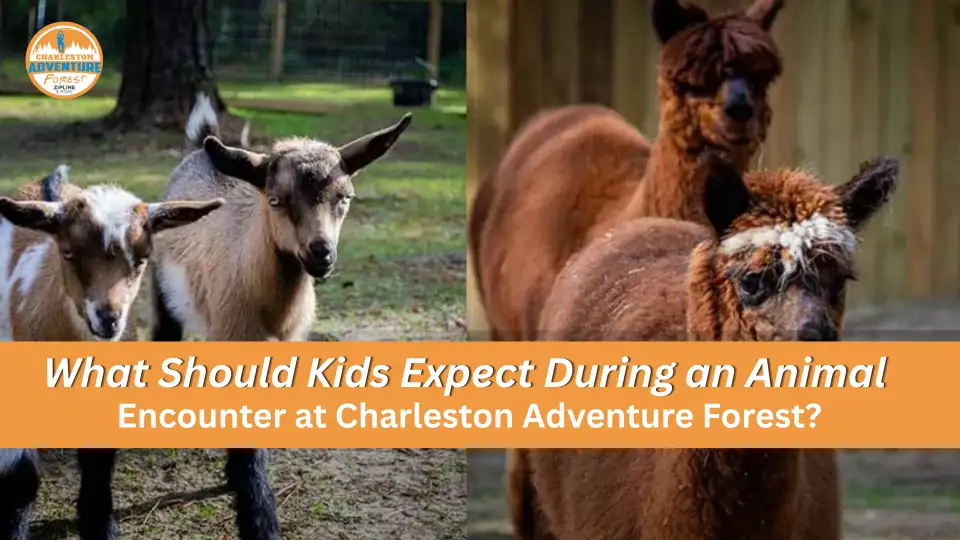
If you're planning an animal encounter at Charleston Adventure Forest, expect much more than simply looking at animals from a distance. Kids get the chance to meet friendly animals up close, learn their names and personalities, and discover interesting facts about how they live, eat, and interact with people. Each encounter is designed to be fun, educational, and engaging, helping children build a deeper appreciation for animals and the natural world.
Many kids are surprised to learn that every animal has its own unique personality. Some may be curious and eager to greet visitors, while others can be a little shy at first. Guided by experienced staff, children can safely observe animal behaviors, ask questions, and enjoy hands-on experiences that create lasting memories. Whether it's their first animal encounter or their tenth, kids can expect an exciting adventure filled with learning, discovery, and plenty of smiles.
Families planning a full day can also explore our guide to the best things to do in Charleston, SC with kids.
Before the Encounter Begins: Building Excitement and Curiosity
Before any child lays eyes on an animal, something interesting is already happening. Anticipation. Kids who were chatting about ziplines on the way over suddenly go a little quiet when they realize the animal encounter is next. Some are practically bouncing. Others hang back, staying close to a parent, not entirely sure how they feel. Both reactions are completely normal and experienced guides at Charleston Adventure Forest have seen every version of them.
The moments before the encounter begins are intentional. Guides don't just open a gate and let kids rush in. They take time to crouch down to a child's level, introduce themselves, and let curiosity build naturally. A question here, a fun teaser fact there. Did you know some animals can recognize individual human voices? By the time the actual encounter starts, even the most hesitant child is usually leaning forward just a little.
If your child tends toward shyness or nervousness around new things, this lead-up is where the experience earns its reputation. Good animal guides are part educator, part kid whisperer and they're practiced at making every child feel ready.
The First Meeting: Seeing the Animals Up Close for the First Time
For many children, this is the highlight of the experience and often the moment they remember most long after the visit ends. Seeing an animal up close creates a sense of connection that's difficult to replicate through books, videos, or traditional zoo exhibits.
A Moment That Captures Attention
There's a particular look that crosses a child's face the first time they see an animal up close, not through glass, not in a picture, but right there. Eyes go wide. Mouths open. Some kids instinctively grab a parent's hand. Some immediately step forward.
Guides read this moment carefully. The introduction to each animal is paced to match how the group is responding. If kids are excited and engaged, the guide leans into that energy. If someone in the group looks uncertain, the pace slows, the voice softens, and space is created for the child to warm up at their own speed. The animals aren't simply presented as things to look at. From the first moment, guides frame each animal as a character with a story which brings us to the part kids almost always love most.
Learning the Animals' Names and Personalities
Every animal has a name. And every animal, it turns out, has a personality. This is something that surprises a lot of kids and many adults. Children who have only ever seen animals in documentaries or behind zoo glass often don't expect individuality. But guides make a point of introducing each animal the way you'd introduce a friend: This is Mango. She's a little shy at first but she warms up fast. She loves being scratched behind the ears.
Those details matter. They transform an abstract "animal encounter" into something that feels personal. Kids become invested. They want to know more about Mango. They want to be the one Mango likes. And suddenly, a child who wasn't sure they wanted to be there is asking questions and paying closer attention than they do in school.
From Watching to Interacting: How Kids Become Part of the Experience
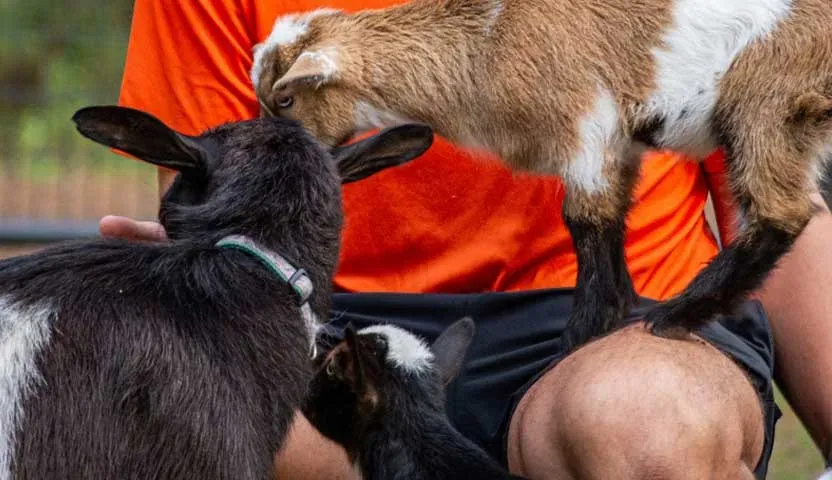
Interactive experiences help children build confidence while creating a deeper appreciation for animals and their behaviors. Being actively involved makes the encounter feel more memorable, personal, and exciting.
Petting, Feeding, and Guided Interactions
There's a meaningful difference between watching an animal and being part of its world, even briefly. At Charleston Adventure Forest, the goal is always to move children from observer to participant at whatever pace feels right for each child. Depending on the animal and the day, hands-on activities can include petting, feeding, and guided holding. Every interaction is supervised by a trained guide who is simultaneously managing the child's experience and the animal's comfort. Neither gets pushed beyond what feels natural.
For kids, the feeding moments tend to be particularly electric. Feeling an animal take food from your hand, the warmth of it, the gentle pressure creates an immediate, physical connection that no amount of observation can replicate. It's also a great equalizer. The shy kid who hung back at the beginning often lights up completely at this moment.
Learning Through Participation
What makes animal encounters at Charleston Adventure Forest genuinely educational isn't a lecture. It's the questions kids start asking on their own. Why does it do that with its tail? Does it sleep during the day? Can it hear us talking?
Guides encourage every question, no matter how many times they've heard it. The participation model touching, feeding, observing up close triggers a kind of engaged curiosity that passive learning rarely does. Kids aren't just receiving information. They're investigating. And the things they discover through their own observations tend to stick in a way that a fact sheet never would.
The Surprising Things Kids Learn Without Realizing It
Animal encounters naturally blend fun and learning, allowing children to absorb new information without feeling like they're in a lesson. Many of the most valuable takeaways happen simply through observation, conversation, and hands-on experiences.
Understanding Animal Behaviors
Kids come into an animal encounter expecting to think animals are cool. They don't always expect to understand them. But the guided experience at Charleston Adventure Forest is built around behavioral context not just what animals look like, but why they do what they do. Why does this animal freeze when it hears a loud noise? Why does it hold its head that way? What does it mean when it makes that sound?
These aren't presented as biology lessons. They come up naturally, in response to what the animal is actually doing at the moment. A child notices something. The guide explains it. And without any of the formality of a classroom, that child has just learned something real about animal behavior, instinct, and how living things communicate.
Developing Respect for Wildlife
One of the quieter but more lasting things children take away from a well-run animal encounter is a genuine sense of respect. Not the rule-following kind that comes from understanding. When a guide explains that an animal needs to feel safe before it will relax around you, and a child watches that process happen in real time, something shifts. The animal stops being a prop for a fun photo and becomes a creature with its own feelings, boundaries, and preferences.
Kids learn to move slowly, speak quietly, and pay attention to signals the animal is giving. These aren't just safety guidelines, they're lessons in empathy, applied to a context most children find completely compelling.
How Animal Encounters Help Children Grow
Beyond the excitement of meeting animals, these experiences can support important personal development skills. Children often leave with greater confidence, curiosity, and a stronger connection to the world around them.
Building Confidence Around New Experiences
Not every child walks into an animal encounter feeling brave. Some are visibly nervous. Some announce loudly that they definitely don't want to touch anything. And then something happens. A guide makes space for them. The animal does something funny or gentle. Another kid reaches out first and nothing bad happens. Slowly, cautiously, the nervous child takes a step forward.
That moment the moment a child decides to try something that scares them and discovers they can do it is one of the most valuable things an outdoor experience can offer. It has nothing to do with animals specifically. It's about learning that the scary thing was manageable, that bravery is a choice, and that the feeling on the other side of fear is usually pride. Parents notice this. The child who didn't want to participate often becomes the one who doesn't want to leave.
Encouraging Curiosity and Exploration
Animal encounters have a way of opening doors that stay open. A child who held a reptile for the first time starts noticing lizards in the backyard. A child who learned why birds fluff their feathers starts pointing them out on the way to school. The encounter plants a seed of curiosity about the natural world that outdoor time, nature documentaries, and library books can keep feeding. At Charleston Adventure Forest, the animal encounter doesn't exist in isolation. It sits within a broader outdoor experience designed to pull children away from screens and into genuine engagement with the natural world around them. The animal encounter often becomes the emotional centerpiece of that shift.
What Makes Animal Encounters Different From Seeing Animals at a Zoo?
The zoo comparison comes up often, and it's a fair one. Zoos are wonderful. But the experience they offer is fundamentally different and understanding that difference helps explain why animal encounters leave such a strong impression. At a zoo, children observe. They stand on one side of a barrier and watch animals on the other. The animals are generally at a distance, often moving around in ways that have nothing to do with the children watching. It's educational and valuable but it's passive.
An animal encounter at Charleston Adventure Forest is participatory. There's no barrier. The child is in the experience, not watching it from outside. The guide is talking directly to them, responding to their specific questions, adjusting to their reactions. The animal may be looking right at them, eating from their hand, or resting against their arm. That directness and the lack of distance is what makes the memory. Children don't remember things they watched. They remember things they did.
Tips for Parents to Make the Experience Even Better
A little preparation beforehand can help your child feel more comfortable, confident, and ready to fully enjoy the animal encounter experience.
What to Wear and Bring
A few practical notes that make a real difference:
- Comfortable, close-fitting clothing nothing with long flowing sleeves or dangling accessories that might startle an animal
- Closed-toe shoes required for most outdoor activities at Charleston Adventure Forest, and especially important around animals
- Water Charleston summers are warm, and outdoor activities move faster when everyone is hydrated
- Weather-appropriate layers morning encounters can be cooler; afternoon encounters in summer can be hot. Light, breathable layers work well
- A camera or charged phone the moments during an animal encounter are genuinely photo-worthy, and kids love seeing themselves in the pictures afterward
Leave behind: strong perfumes or scented lotions, which can be unsettling for animals with sensitive noses.
Helping Your Child Feel Prepared
The most useful thing a parent can do before an animal encounter is set honest expectations, not oversell it, and not downplay it. Tell your child what will happen in simple terms: you'll meet some animals, a guide will show you how to interact with them, and you can go at your own pace. Make it clear that nervousness is okay and that nobody will be forced to do anything they don't want to do.
Encourage questions. Let your child know that the guides love being asked things, no matter how many times they've heard the question. And once you're there, resist the urge to push. Children who are given space to approach at their own pace almost always get there and the experience means far more when it's self-directed.
Why Animal Encounters Are One of the Most Memorable Activities at Charleston Adventure Forest
Families come to Charleston Adventure Forest for a lot of reasons: the ziplines, the outdoor setting, the chance to do something active together. The animal encounter often gets added almost as an afterthought. It rarely stays that way.
What families describe afterward is a shared experience that brought everyone together in a way that parallel activities don't. While one child holds an animal, everyone else is watching, reacting, laughing, asking questions. It becomes a group moment. The kind that gets referenced later, remember when your sister wouldn't let go of that lizard? and becomes part of the family's story of the day. The educational value compounds over time too. The facts kids pick up during an encounter tend to resurface. A child who learned about a specific animal's habitat may bring it up weeks later in a completely different context. That kind of retention is what happens when learning is attached to an emotional, physical experience rather than a worksheet.
And the memories themselves the ones children carry out of the forest tend to be vivid and specific in a way that most activities aren't. Not "we did fun stuff," but I held a snake and it wrapped around my wrist and I wasn't even scared. That's the experience. It's worth adding to your visit.
Ready for a Wild Adventure Your Kids Will Love?
Looking for a family activity that combines outdoor adventure, hands-on learning, and unforgettable memories? At Charleston Adventure Forest, our animal encounters give children the chance to meet amazing animals up close, build confidence, and develop a deeper appreciation for wildlife in a fun, guided environment. Whether you're planning a family outing, weekend adventure, or special experience for your child, there's something here everyone will enjoy. Book your visit to Charleston Adventure Forest today and discover why our animal encounters are often the highlight of the entire day.
Book Animal Encounter AdventureConclusion
From the nervous anticipation before the encounter begins to the moment a child realizes they just held an animal they were afraid of five minutes ago, the arc of an animal encounter at Charleston Adventure Forest is one of the most complete outdoor experiences a family can have.
Kids meet animals with real names and personalities. They learn through participation, not instruction. They develop respect for wildlife not because someone told them to, but because they experienced it firsthand. They leave with facts in their heads, confidence in their hearts, and a story they'll be telling long after the drive home. If you're planning a visit to Charleston Adventure Forest, add the animal encounter to your day. It's the part your family will keep talking about.
Frequently Asked Questions
What age can participate in an animal encounter?
Animal encounters at Charleston Adventure Forest are suitable for a wide range of ages. Most children ages 4 and up can actively participate, while younger children can enjoy the experience with parental support. Guides adjust activities and interactions to match the age and comfort level of the group.
What if my child is shy or nervous around animals?
It's completely normal for some children to feel nervous around animals at first. Guides create a relaxed, supportive environment and never force children to interact. Many kids become more comfortable as they watch others participate and see how calm and friendly the animals are.
Are animal encounters safe for young children?
Yes. Animal encounters are carefully supervised by trained staff, and the animals are selected for their suitability in interactive experiences. Guides provide clear instructions and monitor all interactions to help ensure a safe and enjoyable experience for children and families.
How long does the experience last?
Most animal encounters last between 20 and 45 minutes, depending on the group size and format of the experience. This provides enough time for children to interact, learn, and ask questions without feeling overwhelmed.
Can families participate together?
Absolutely. Animal encounters are designed to be family-friendly experiences that parents and children can enjoy together. Sharing the experience often makes it more memorable and gives families an opportunity to learn and interact side by side.
Do animal encounters happen in all types of weather?
Animal encounters may continue during light rain, but severe weather conditions such as lightning or extreme heat can affect scheduling. If weather impacts an encounter, Charleston Adventure Forest will provide updates and guidance regarding any changes.